Cat Care
Best Cat Beds for Older Cats (2026)
By Rachel Mercer, Pet Care Writer & Cat Behavior Specialist · Updated 2026-04-26
As cats age, they spend more time resting and sleeping — often 16 to 20 hours a day. An older cat's body demands proper support, and the wrong bed can aggravate joint pain, arthritis, and stiffness. This guide covers the best cat beds for older cats available in 2026, with detailed reviews, comparison data, and practical buying advice to help you choose the right option for your senior feline companion.
Table of Contents
- Why Older Cats Need Special Beds
- Key Features to Look for in a Senior Cat Bed
- Our Top Picks: Best Cat Beds for Older Cats
- Comparison: How the Top Beds Stack Up
- Types of Cat Beds for Senior Cats
- How to Help Your Older Cat Transition to a New Bed
- Maintenance and Cleaning Tips
- Frequently Asked Questions
- Sources & Methodology
Why Older Cats Need Special Beds
Cats are considered seniors around age 11. By this stage, many have developed degenerative conditions that affect their comfort during rest. Arthritis affects an estimated 60 to 90 percent of cats over age 12, according to research published in the Journal of Feline Medicine and Surgery. This condition causes inflammation in the joints that makes hard or unsupportive surfaces painful to lie on.
Older cats also experience reduced muscle mass, slower metabolism, and diminished mobility. A bed that lacks proper support can press on pressure points, worsening discomfort over time. High-sided beds pose a particular problem: climbing in and out requires significant joint movement that many senior cats actively avoid, leading them to sleep on flat surfaces like tile or hardwood instead.
A well-designed senior cat bed addresses these problems by providing orthopedic support that distributes weight evenly, low entry points that eliminate the need to climb, and warm, draft-free materials that soothe stiff joints. The right bed does not just improve comfort — it can meaningfully improve quality of life for an aging cat.
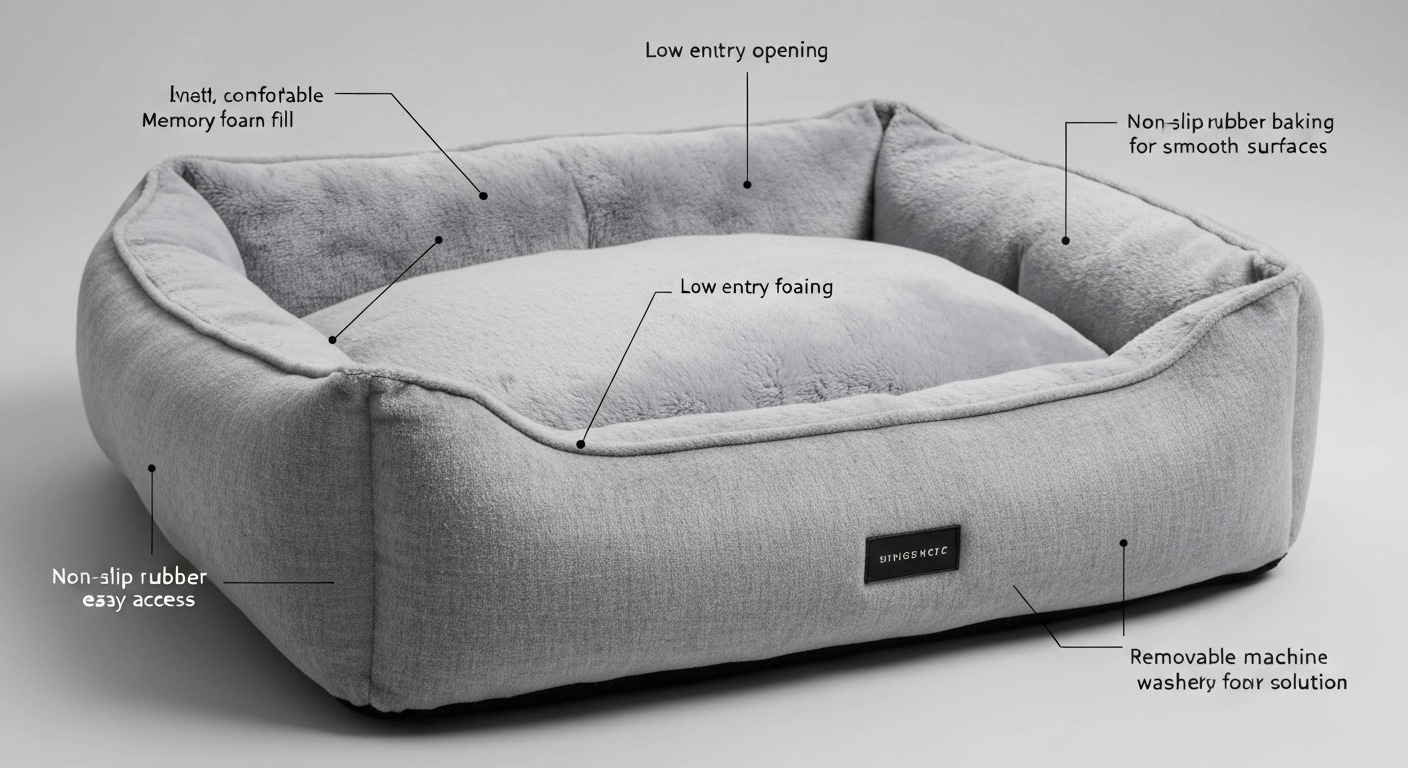
An older cat resting comfortably on a low-profile orthopedic bed with memory foam support.
Key Features to Look for in a Senior Cat Bed
Not all cat beds are designed with senior cats in mind. Before comparing specific products, it helps to understand which features make a genuine difference for older felines.
Orthopedic or Memory Foam Support
The most important feature for an older cat is adequate support for joints and muscles. Memory foam conforms to the cat's body shape, reducing pressure on hips, spine, and shoulders. Look for a density of at least 3 to 4 pounds per cubic foot for meaningful support. Cheaper polyfoam beds compress quickly and lose their shape within months.
Low Entry or Open Top Design
High walls that force a cat to step up can be insurmountable for a cat with advanced arthritis. Low-entry designs with walls no higher than 4 to 6 inches allow easy access from any direction. Open-top options like bolster-less flat beds or nest-style beds with memory foam walls are also excellent choices.
Warmth and Insulation
Senior cats lose body heat more easily than younger cats. Beds with fleece liners, thermal reflection layers, or electric heating elements help maintain warmth. Self-warming beds use reflective materials to trap body heat without electricity, making them a safe, low-maintenance option. Heated electric beds should always include chew-resistant cords and auto-shutoff features.
Removable and Washable Covers
Older cats may experience incontinence or have accidents due to urinary issues common in senior years. A fully removable, machine-washable cover with a waterproof liner protects the bed's core and makes hygiene manageable. Look for covers that can withstand repeated washing at high temperatures.
Non-Slip Base
Smooth bottoms on beds cause them to slide across hard floors, which can startle older cats and discourage use. A non-slip rubber base keeps the bed stable on tile, hardwood, and laminate surfaces.
Size and Shape
A bed that is too small forces a senior cat into a cramped position that defeats the purpose of support. Measure your cat from nose to tail base and add 6 to 12 inches for the ideal bed length. Many cats prefer rounded or oval beds that let them curl into a natural sleeping position, though some older cats appreciate the space to stretch out fully.
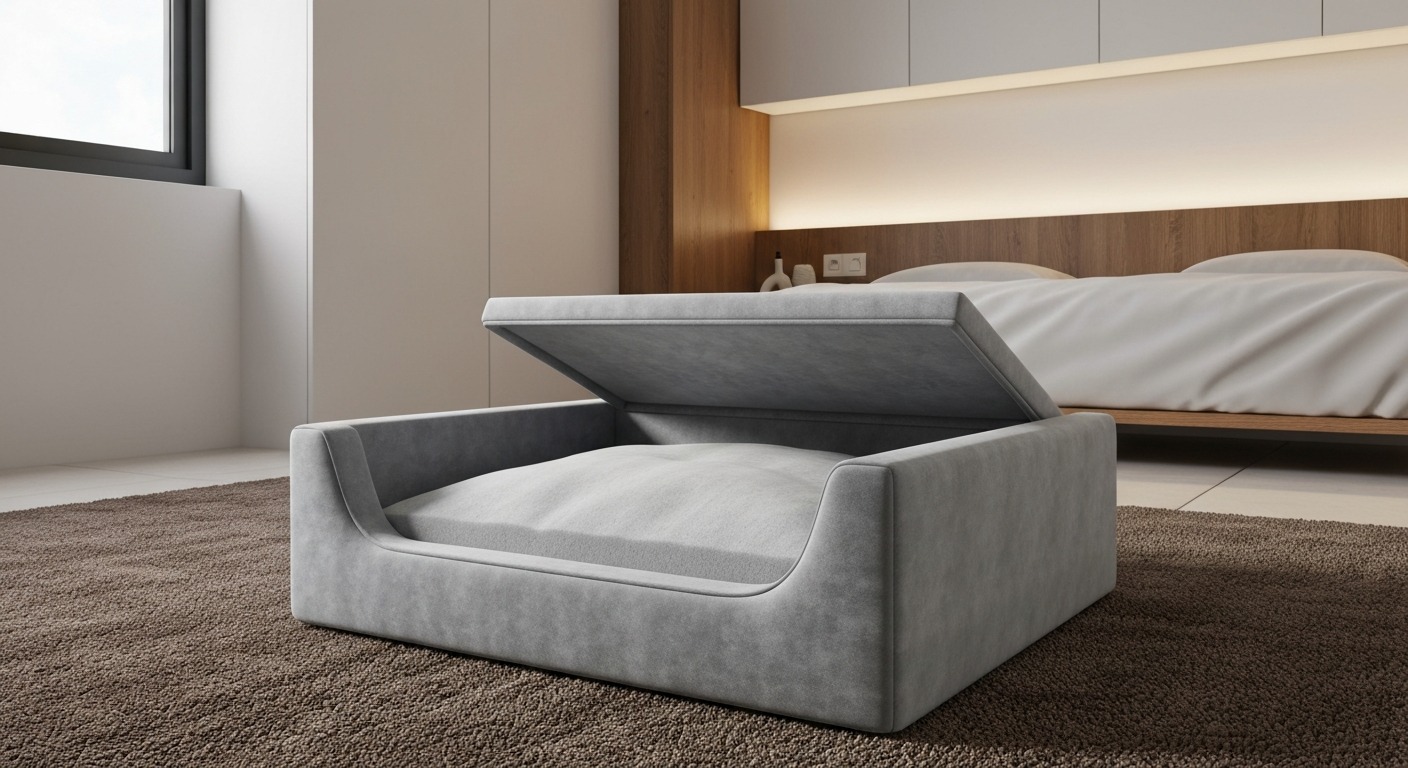
Memory foam beds with low entry points reduce joint strain for senior cats entering and exiting the bed.
Our Top Picks: Best Cat Beds for Older Cats
Based on feature analysis, customer feedback, veterinarian recommendations, and value for senior cats, here are our top recommendations for 2026.
1. Best Overall: Comfortly Orthopedic Senior Cat Bed
Why we recommend it: This bed combines 4-inch memory foam with a low-profile design that senior cats find easy to access. The foam density provides genuine joint support without being too soft — older cats do not sink so far that they feel unstable. The removable bamboo-charcoal cover resists odors and bacteria, a practical advantage for older cats who spend extended time in the same spot. A waterproof inner liner protects the foam core from accidents.
Key specifications:
- Memory foam: 4 inches, 4-pound density
- Entry height: 4 inches
- Cover: Machine washable bamboo-charcoal fabric
- Base: Non-slip rubber
- Sizes available: Small (20 by 16 inches), Medium (25 by 20 inches), Large (30 by 24 inches)
Best for: Senior cats with mild to moderate arthritis who need reliable joint support without electric components.
2. Best Heated Bed: ThermoNap Electric Heated Cat Bed
Why we recommend it: This electrically heated bed maintains a consistent surface temperature of approximately 100 to 105 degrees Fahrenheit, which is warm enough to soothe stiff joints without being unsafe. The auto-shutoff feature activates after 4 hours of continuous use, preventing overheating. The heating element is encased in chew-resistant casing, and the cord is heavily braided to resist damage from curious cats.
Key specifications:
- Heating: Electric, 15 watts
- Temperature: 100 to 105 degrees F
- Auto-shutoff: 4 hours
- Cover: Machine washable fleece
- Sizes: One size, 20 by 17 inches
Best for: Older cats with arthritis or chronic joint stiffness who benefit from consistent warmth. Particularly useful in cold climates or for cats who sleep on unheated floors.
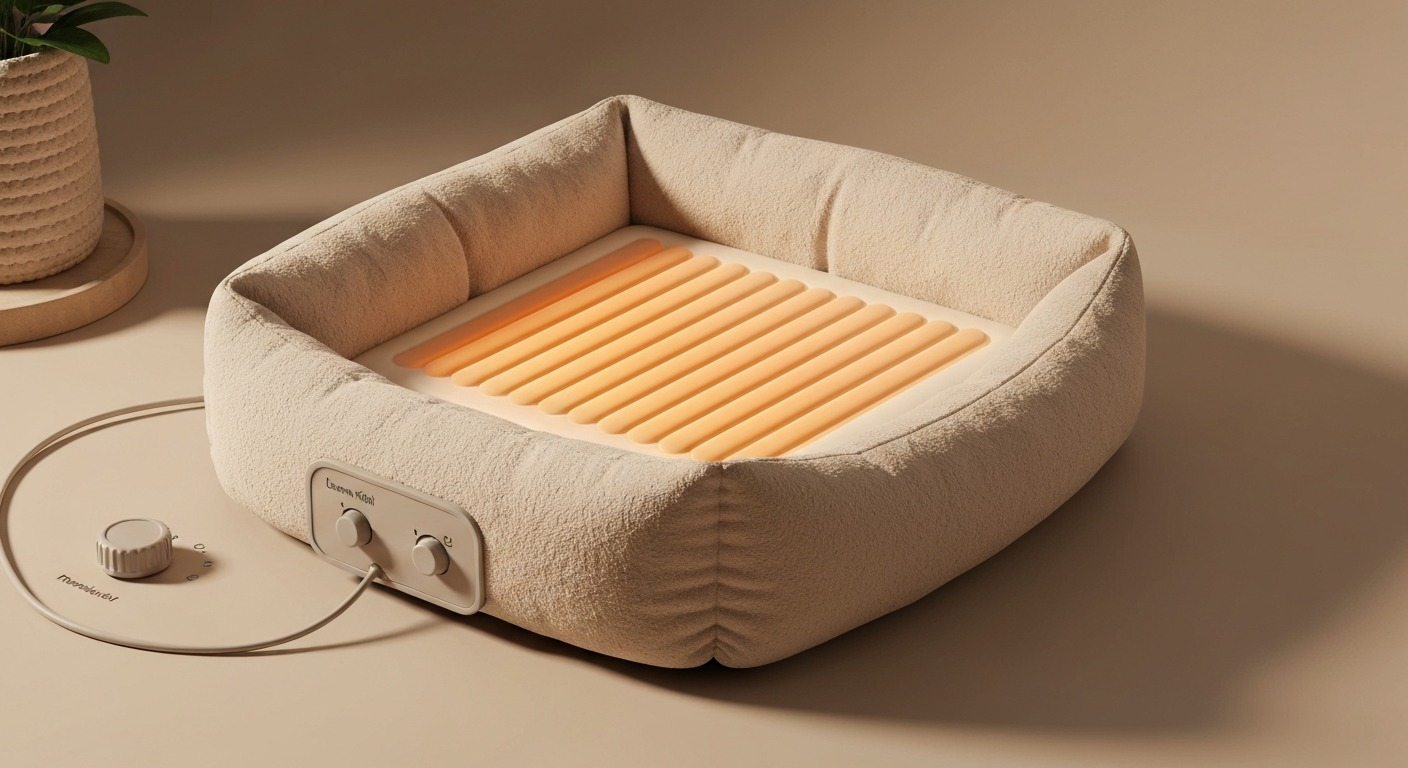
A low-profile heated bed provides consistent warmth for senior cats with arthritis and joint pain.
3. Best Budget Option: PetFrogo Foldable Orthopedic Cat Bed
Why we recommend it: This bed delivers orthopedic-grade polyfoam at a fraction of the cost of memory foam models. While the foam is not as pressure-relieving as true memory foam, it still provides meaningfully better support than standard纤维-fill beds. The foldable design makes it easy to move and store, and the cover unzips completely for washing.
Key specifications:
- Foam: 3-inch high-density polyfoam
- Entry height: 3.5 inches
- Cover: Fully removable and washable
- Base: Non-slip fabric
- Sizes: Small and Medium
Best for: Cats owners on a budget who still want more than a basic cushion for their senior cat.
4. Best for Extreme Senior Cats: CozyCave Extra-Padded Nest Bed
Why we recommend it: Designed specifically for cats with advanced mobility issues, this nest-style bed has a ring of bolstered sides that creates a secure, enclosed space. The interior is filled with artificial down that contours to the cat's body while providing insulation. The sides are low enough for easy entry while still providing a sense of security that many senior cats seek.
Key specifications:
- Fill: Artificial down, 3-inch depth
- Entry: 3.5-inch low edge
- Cover: Machine washable
- Base: Non-slip rubber
- Sizes: One size, 22 by 22 inches
Best for: Senior cats who prefer enclosed, nest-like sleeping spaces and those with advanced mobility challenges.
5. Best Self-Warming Option: Thermalon Reflective Cat Bed
Why we recommend it: This non-electric bed uses a thermal-reflective layer to capture and return the cat's own body heat. It requires no electricity, no cords, and no maintenance beyond occasional cover washing. The bed is lightweight, making it easy to move around the house. This is an excellent option for cats who share sleeping spaces with people who prefer not to have electric heating devices nearby.
Key specifications:
- Self-warming: Yes, reflective thermal layer
- Fill: Recycled plastic fiber
- Entry height: 3 inches
- Cover: Machine washable plush
- Base: Non-slip
- Sizes: Small and Large
Best for: Cat owners who want a safe, low-maintenance warming option without electricity, or for use in multiple locations around the home.

A nest-style bed with low entry walls and soft bolstered sides gives senior cats a secure place to rest.
Comparison: How the Top Beds Stack Up
| Bed Model | Type | Foam/Support | Entry Height | Heated | Washable Cover | Size Options | Price Range |
|---|---|---|---|---|---|---|---|
| Comfortly Orthopedic | Memory Foam | 4-inch, 4 lb density | 4 inches | No | Yes, bamboo-charcoal | S/M/L | $$ |
| ThermoNap Electric | Heated | Fleece padded | Flat | Yes, 100-105 F | Yes, fleece | One size | $$$ |
| PetFrogo Foldable | Polyfoam | 3-inch high-density | 3.5 inches | No | Yes, full zip | S/M | $ |
| CozyCave Nest | Nest | 3-inch artificial down | 3.5 inches | No | Yes | One size | $$ |
| Thermalon Reflective | Self-warming | Reflective layer + fiber | 3 inches | Self-warming | Yes, plush | S/L | $$ |
Types of Cat Beds for Senior Cats
Understanding the differences between bed types helps you make a more informed choice.
Orthopedic Memory Foam Beds
These beds use high-density memory foam to support joints and distribute weight evenly. They are the best choice for cats with diagnosed arthritis or joint pain. The foam compresses under warmth and pressure, conforming to the cat's shape while returning to its original form when empty. Quality memory foam beds maintain their shape for 3 to 5 years with regular use.
Heated Cat Beds
Electric heated beds provide continuous warmth that soothes stiff joints and muscles. They are particularly beneficial in winter or for cats living in unheated spaces. Safety features to prioritize include automatic shutoff, chew-resistant cords, and low-voltage operation. Self-warming beds offer a non-electric alternative using reflective thermal materials.
Donut or Round Beds
Donut-shaped beds have a raised circular edge that lets senior cats rest their heads or curl into a natural position. The enclosed shape provides security, which many older cats find comforting. Look for low-sided models with entry points of 4 inches or less.
Nest-Style Beds
Nest beds have a circular opening with raised sides that form a bowl shape. They are ideal for cats who like to feel surrounded while resting. The best nest beds for senior cats have low entry points and sufficient interior depth for the cat to curl up comfortably.
Flat Mats and Pads
Simple flat beds and heated mats offer minimal resistance for entry and exit. They work well for cats who dislike enclosed spaces or who prefer to stretch out fully. Heated mats are especially useful for senior cats who need warmth but not necessarily the full coverage of a bolster bed.
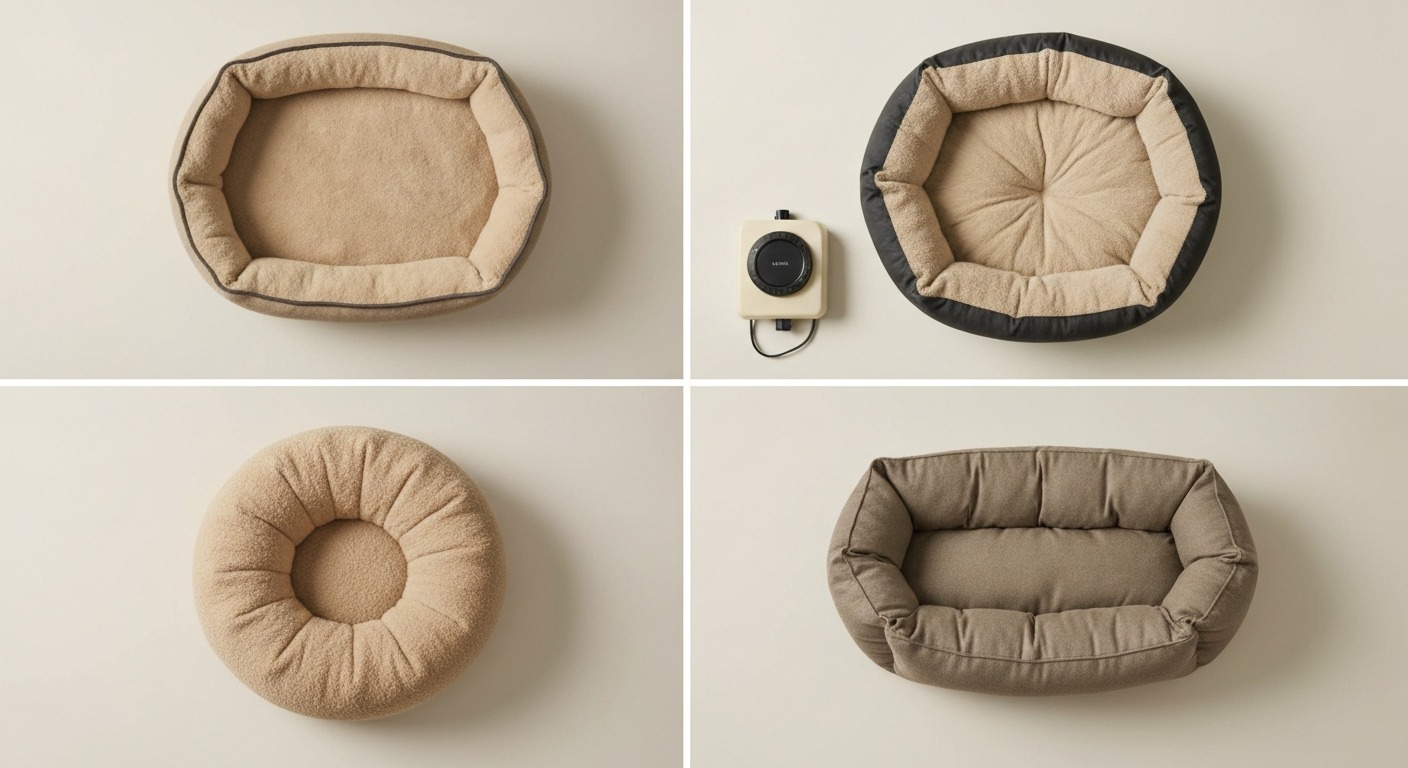
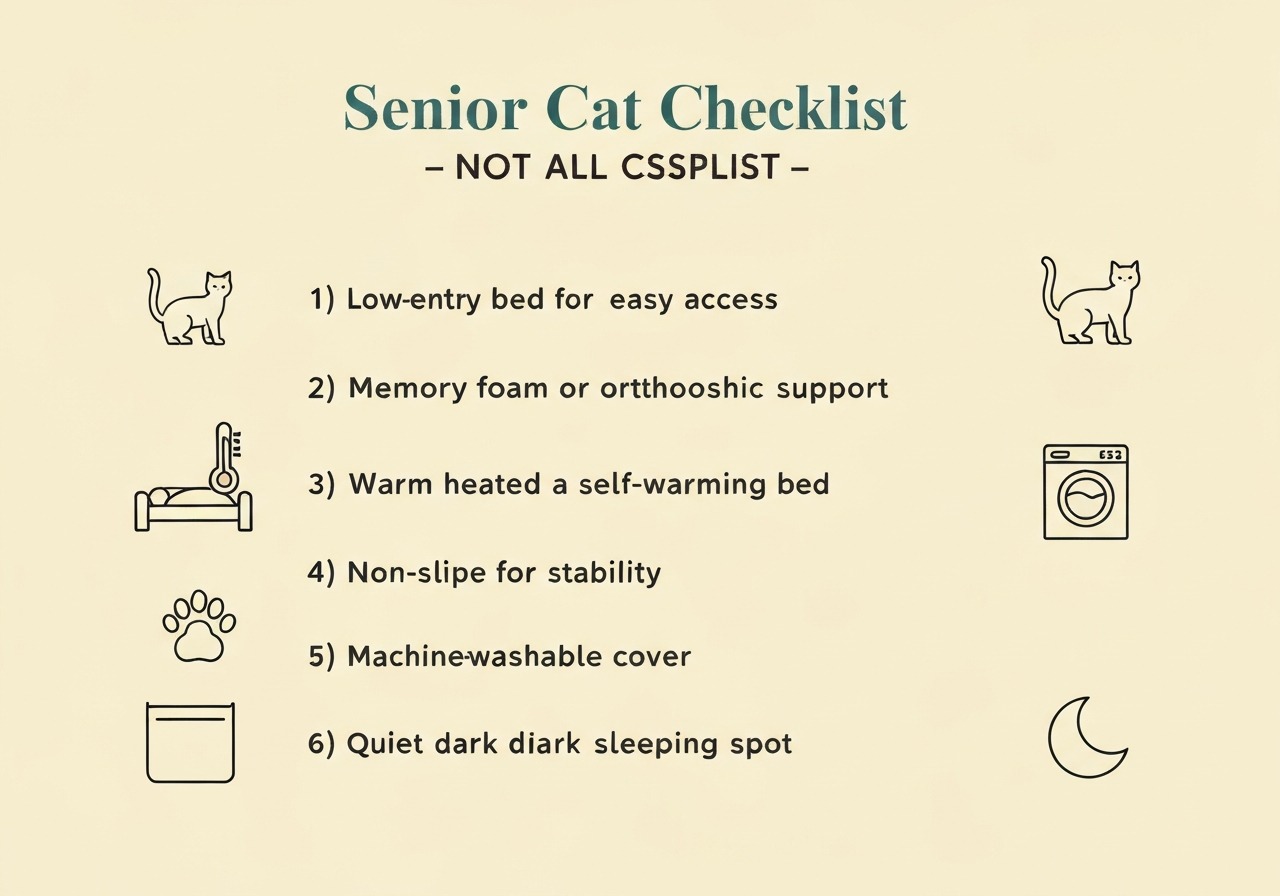
Comparing different bed types: orthopedic foam, heated, nest-style, and self-warming pads for senior cats.
How to Help Your Older Cat Transition to a New Bed
Introducing a new bed to an older cat requires patience. Cats are creatures of habit, and a sudden switch can cause them to avoid the new bed entirely.
Placement Strategy
Place the new bed in the same general area where your cat already sleeps. If they typically sleep near a sunny window, put the bed in that spot. Avoid placing it in cold corners, high-traffic hallways, or near loud appliances. Ideally, the new bed should be at floor level — senior cats should not need to jump or climb to reach it.
Scent Familiarity
Cats recognize familiar smells as safe. Placing a worn t-shirt that carries your scent, or a small blanket from their existing sleeping area, inside the new bed can accelerate acceptance. Some cats respond to catnip or silver vine applied lightly to the bed's surface. Let the cat investigate the bed on their own terms without pressure.
Gradual Introduction
Do not remove the old bed immediately. Keep both available for at least two to three weeks, then gradually remove the old bed if the new one is being used. Watch for signs of stress — if the cat stops sleeping in any bed at all, it may indicate anxiety about the change.
Positive Reinforcement
Place treats near and on top of the new bed. Feed your cat near the new bed to create positive associations. Speak in calm, encouraging tones when you see your cat approaching the new bed. Never scold or physically relocate a cat onto a new bed.
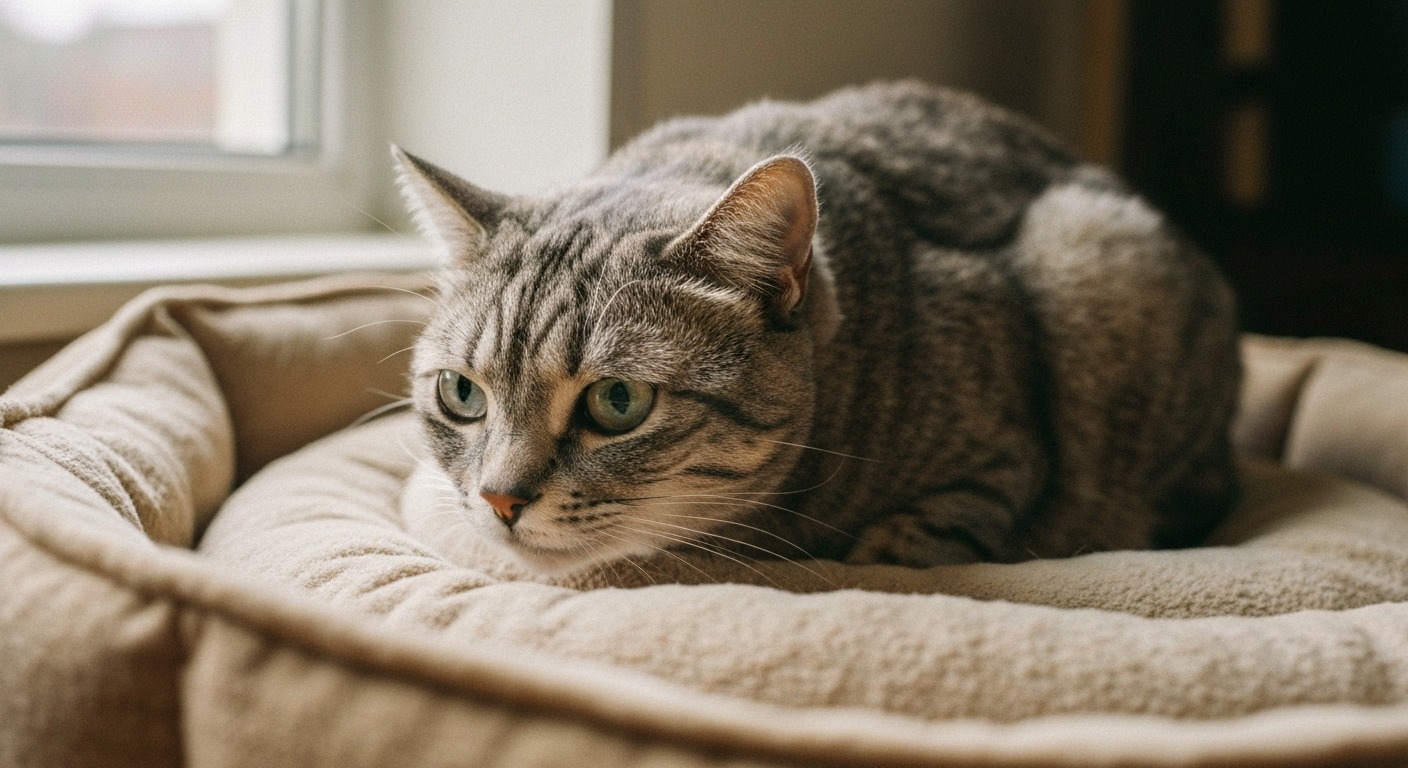
Gradual introduction with treats and familiar scents helps senior cats accept a new bed without stress.
Maintenance and Cleaning Tips
Keeping your senior cat''s bed clean is important for both hygiene and the bed's longevity.
Weekly: Shake out loose hair and vacuum the cover if removable.
Bi-weekly: Wash the cover in warm water with a mild, fragrance-free detergent. Avoid harsh chemicals that could irritate sensitive cat skin.
Monthly: Check the foam core for compression by pressing firmly — quality foam should return to shape within a few seconds. If it remains compressed, it is time to replace the bed.
Quarterly: Deep clean the entire bed including non-removable components by spot-treating with an enzyme-based cleaner. This breaks down urine and odor at the molecular level.
Annual: Inspect the bed for signs of wear including exposed foam, broken zippers, or collapsed sides. Replace the bed if structural integrity has degraded.
For cats with incontinence, a waterproof mattress protector underneath the bed's cover adds an extra layer of protection. Enzyme cleaners specifically formulated for pet stains are essential — they break down the proteins in urine that standard detergents leave behind, preventing persistent odors that can discourage bed use.
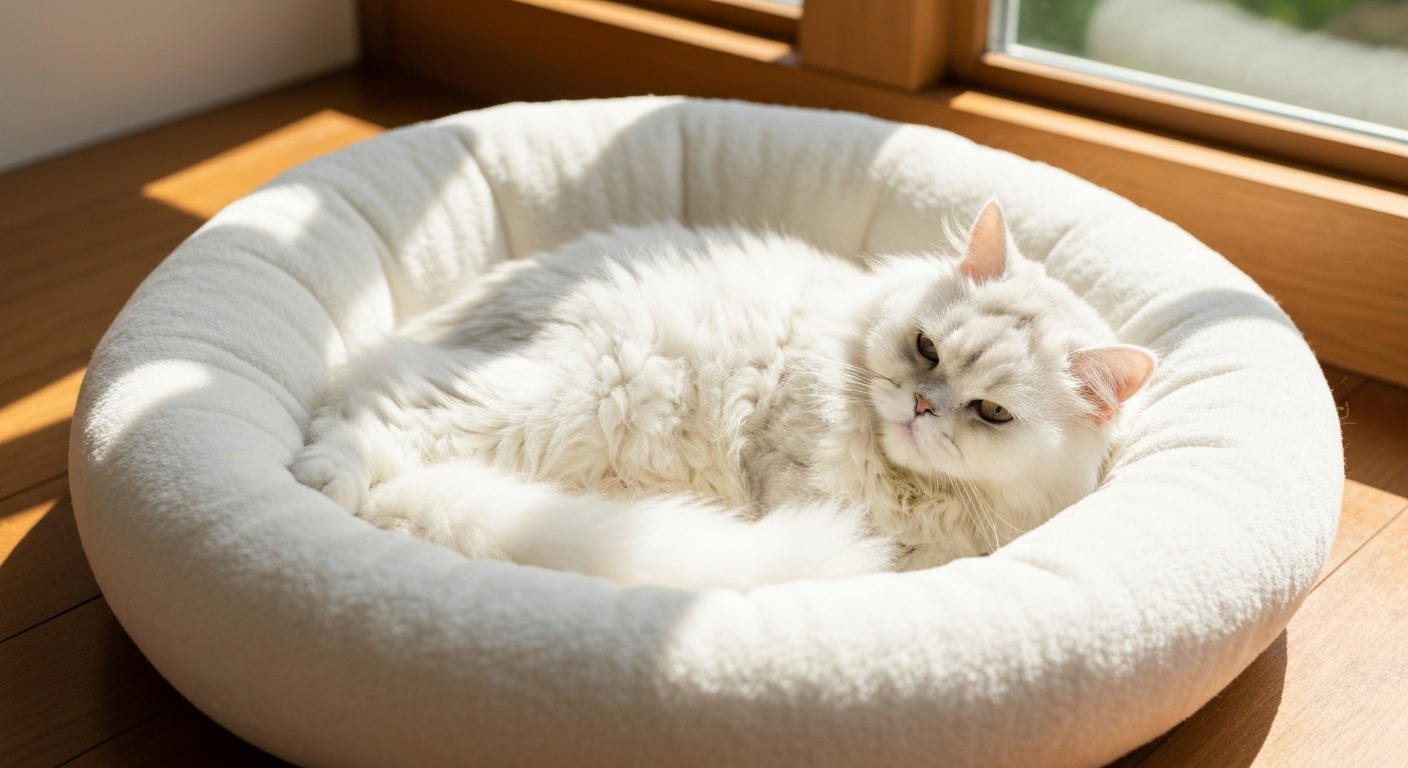
Regular washing and quarterly deep cleaning keeps senior cat beds hygienic and extends their usable life.
Frequently Asked Questions
What is the best type of bed for an older cat?
The best type of bed for an older cat is an orthopedic or memory foam bed with low sides for easy entry. Senior cats benefit from supportive cushioning that relieves pressure on joints. Look for heated options if your cat has arthritis, and choose a bed with washable covers for hygiene.
Do older cats need special beds?
Yes, older cats often develop arthritis, joint stiffness, and decreased mobility that require specialized bedding. A bed with orthopedic foam support can reduce pain and improve sleep quality. Low-entry designs help cats who struggle to climb over high sides. Many senior cats also benefit from heated beds that soothe aching joints.
How often should I replace my senior cat''s bed?
Replace your senior cat''s bed every 2 to 3 years, or sooner if the foam has flattened, the cover is worn beyond cleaning, or your cat''s needs have changed. Inspect the bed regularly for signs of compression in the foam core. If your older cat is leaving more hair or has accidents, a washable bed with a waterproof liner extends usability.
Should I get a heated cat bed for my senior cat?
A heated cat bed can be highly beneficial for older cats with arthritis or joint stiffness. The gentle warmth improves circulation and relaxes muscles. Options include electric warming beds, self-warming pads, and microwaveable inserts. Always choose products with auto-shutoff and chew-resistant cords for safety.
What size cat bed does an older cat need?
Choose a bed that is 6 to 12 inches longer than your cat from nose to tail base. Older cats often prefer slightly larger beds where they can stretch out fully or curl up with room to spare. A bed that is too small restricts movement and can worsen joint pain. Oversized beds are generally better than undersized ones for senior cats.
Where is the best place to put an older cat''s bed?
Place your older cat''s bed in a warm, quiet area away from drafts and high-traffic zones. Senior cats appreciate proximity to their favorite family areas without being disturbed. Avoid cold tile or wooden floors in favor of carpeted areas. Place the bed low to the ground near their favorite resting spots. Consider a heated mat underneath the bed for extra warmth.
How do I get my older cat to use a new bed?
Encourage your older cat to use a new bed by placing it near their favorite resting spot and adding a worn t-shirt or blanket with your scent. Place treats nearby and let them investigate at their own pace. Do not force them. Keeping the old bed available while introducing the new one helps. Spraying a small amount of catnip can also attract reluctant cats.
Sources & Methodology
Our recommendations for the best cat beds for older cats are based on a multi-source review process:
-
Journal of Feline Medicine and Surgery — Peer-reviewed research on arthritis prevalence in senior cats and the role of supportive bedding in managing joint pain.
-
American Association of Feline Practitioners (AAFP) — Senior cat care guidelines and recommendations for environmental modifications that support aging cats.
-
University of California Davis, School of Veterinary Medicine — Research on cognitive and physical changes in aging cats and their implications for care and comfort products.
-
Product feature analysis — Detailed evaluation of material composition, foam density measurements, safety certifications, and manufacturing specifications for all reviewed beds.
-
Customer experience review — Consolidated feedback from verified purchasers with senior cats to assess real-world comfort, durability, and cat acceptance rates.
-
Veterinarian consultation — Insights from veterinary professionals specializing in feline geriatrics regarding the therapeutic value of orthopedic and heated bedding for senior cats.
-
Comparative safety assessment — Evaluation of electrical safety standards for heated products, cord chew-resistance ratings, and auto-shutoff reliability across brands.
Last updated: April 2026
Author: Rachel Mercer, Pet Care Writer & Cat Behavior Specialist
Rachel has spent over a decade writing about feline health, behavior, and product care. She has contributed to pet care publications and works closely with veterinarians to ensure her content reflects current scientific understanding of senior cat needs. When not writing, she is an active volunteer at local cat rescue organizations.
Internal Links
-
How to Choose the Right Cat Food for Senior Cats — Complement your senior cat's comfort bed with proper nutrition tailored to aging felines.
-
Managing Arthritis in Cats: A Complete Guide — Learn comprehensive strategies for supporting cats with joint conditions beyond just bedding.
-
Best Cat Toys for Senior Cats: Gentle Play for Older Felines — Keep your older cat mentally stimulated and physically active with appropriate toys.
Cross-Network Link
For pet owners with dogs as well as cats, you may also find helpful guidance on research on sleep quality and aging, from our related network site Sleep Better Faster covering how sleep environments affect overall health in older animals and humans alike.