TMJ Guide
Cat Dental Care: How to Clean Your Cat's Teeth
How to clean your cat's teeth: step-by-step guide for brushing, dental treats, and professional cleaning. Prevent periodontal disease in cats. Expert guide 2026.
By Dr. Sarah Mitchell, Veterinary Health Consultant · Published 2026-03-10 · Updated 2026-03-25
This post contains affiliate links. We may earn a commission at no extra cost to you.
Cat Dental Care: How to Clean Your Cat's Teeth
By Dr. Sarah Mitchell, Veterinary Health Consultant | Last updated March 2026
Over 70% of cats show signs of periodontal disease by age 3 -- the result of daily plaque accumulation that hardens into tartar within 48 hours. Regular tooth brushing, appropriate dental treats, and periodic professional cleaning prevent dental disease that causes pain, tooth loss, and systemic health problems. This guide covers the step-by-step process for brushing your cat's teeth, the best dental care products, and what the evidence says about each option.
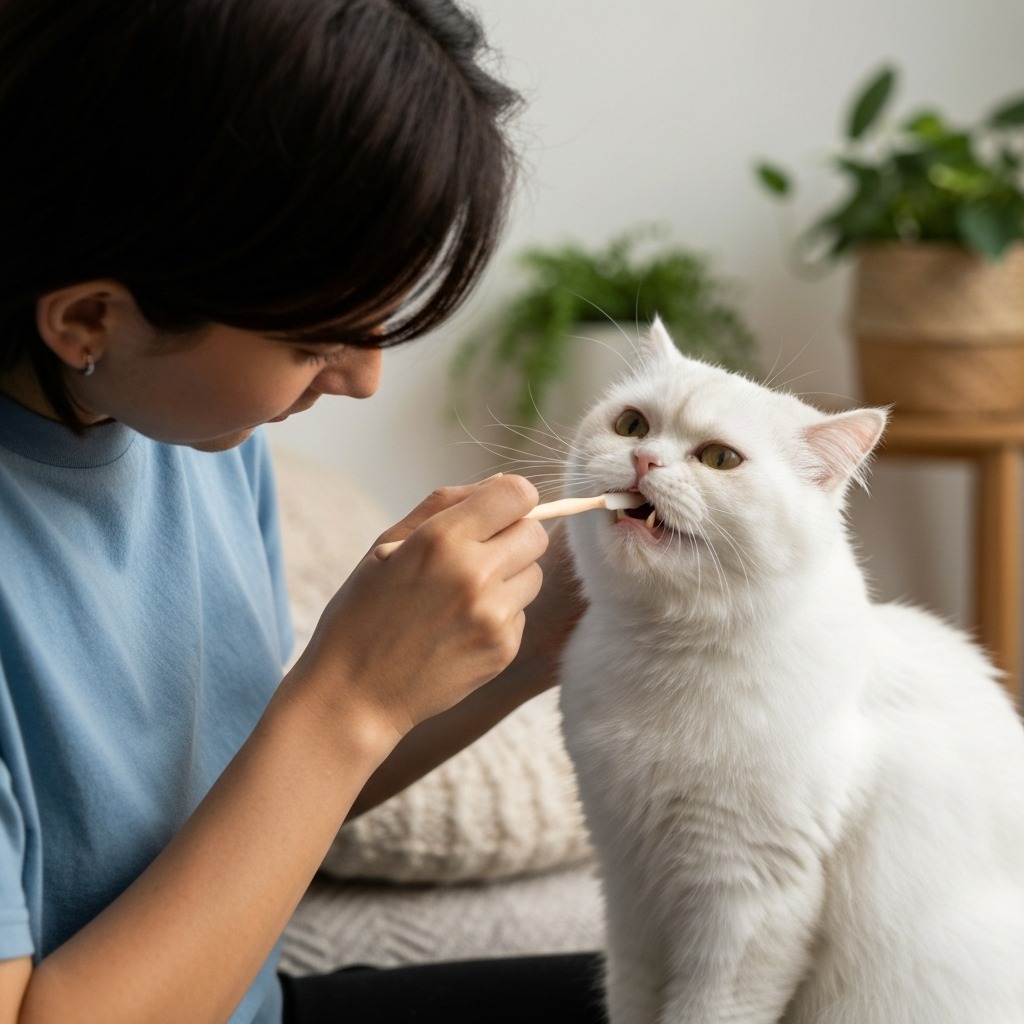
Table of Contents
- Why Cat Dental Care Matters
- How to Train Your Cat for Toothbrushing
- Best Cat Dental Care Products
- Dental Treats and Food Options
- When to See the Vet
- Frequently Asked Questions
- Sources & Methodology
Why Cat Dental Care Matters

Cats are highly susceptible to dental disease. The anatomy of their mouth, combined with high-protein diets, creates conditions that favour plaque accumulation. Without regular dental care:
Day 1: Plaque -- a soft bacterial film -- begins accumulating on tooth surfaces after eating.
Day 2-3: Plaque begins mineralising into tartar (calculus), a hard deposit that cannot be removed by brushing alone.
Week 1-4: Tartar accumulation at and below the gum line causes gingivitis -- the first stage of periodontal disease, characterised by red, inflamed gums.
Months to years: Untreated gingivitis progresses to periodontitis, where bacteria destroy the ligaments and bone that support the teeth. This causes pain, loose teeth, tooth loss, and abscesses.
Systemic effects: Chronic oral bacteria and inflammation are associated with increased risk of kidney disease, liver disease, and endocarditis (heart valve infection) in cats -- the same systemic connection seen in humans and dogs.
For cat emergencies related to dental pain or other health issues, see our guide on pet first aid essentials for what to have on hand.
How to Train Your Cat for Toothbrushing

Most cats can be trained to accept toothbrushing with patience and proper introduction. The key is gradual desensitisation over 4-6 weeks -- never force the process.
Week 1-2: Flavoured Toothpaste Introduction
Put a pea-sized amount of veterinary toothpaste (chicken, malt, or seafood flavour) on your finger. Let your cat lick it off as a treat. Do this daily until your cat actively seeks the toothpaste. Never use human toothpaste -- fluoride and xylitol are toxic to cats.
Week 3: Gum Line Contact
Apply toothpaste to your fingertip and gently rub along the outer gum line of the back teeth (carnassial teeth are the large shearing teeth behind the canines). The motion is more important than the paste at this stage -- you are training acceptance of gum contact.
Week 4: Finger Brush
Introduce a silicone finger brush with toothpaste. Repeat the same gum-line rubbing motion. The texture change requires a new round of acceptance. Go back to the previous step if your cat resists.
Week 5-6: Toothbrush
Move to a small-headed angled toothbrush (or a 45-degree angle child's toothbrush). Focus on the outer surfaces of the upper carnassial and canine teeth -- these accumulate the most plaque and benefit most from brushing. Inner surfaces are less accessible and less critical.
Daily brushing is the gold standard but even 2-3 times weekly provides meaningful benefit over no brushing.
Best Cat Dental Care Products


Virbac CET Enzymatic Toothpaste
Best for: Daily brushing, vet-recommended
Flavours: Poultry, malt, seafood
Check on Amazon
Pet Republique Finger Brush Set
Best for: Training progression
Includes: Finger brushes + toothbrushes
Check on Amazon
Oxyfresh Pet Water Additive
Best for: Supplementary daily care
How it works: Odour neutraliser in water bowl
Check on Amazon
TropiClean Fresh Breath Dental Gel
Best for: Non-brushing alternative
Application: Apply to gum line directly
Check on Amazon
Purina DentaLife Daily Oral Care
Best for: VOHC-approved dental treats
Certification: Veterinary Oral Health Council
Check on Amazon<video autoPlay muted loop playsInline poster="/images/articles/cat-dental-care-clean-teeth-thumb.jpg" style={{width:"100%",borderRadius:"8px",margin:"1.5rem 0"}}>
Dental Treats and Food Options

If your cat will not tolerate toothbrushing, dental treats and dental diets provide a meaningful supplement:
VOHC-Approved Products
The Veterinary Oral Health Council certifies products that have demonstrated plaque and tartar reduction in clinical trials. For cats, VOHC-approved options include:
- Purina DentaLife Adult Cat Treats
- Hills Prescription Diet t/d (dental diet kibble)
- Royal Canin Dental (diet kibble)
Dental Chews and Toys
Rubber dental toys and chews provide mechanical plaque disruption through chewing action. These are supplements to brushing, not replacements.
When to See the Vet

Schedule a dental examination if:
- Significant tartar visible (yellow-brown deposits on tooth surfaces)
- Red, swollen, or bleeding gums
- Bad breath that is noticeably worse than normal
- Your cat is dropping food, eating more slowly, or preferring soft food
- Facial swelling (may indicate tooth root abscess)
- Weight loss (dental pain can cause reduced food intake)
Annual veterinary wellness examinations should include a dental assessment. Many cats show significant dental disease without obvious symptoms -- the vet's examination is the most reliable way to catch early disease.
For related cat care guides, see our articles on how to keep your cat healthy, best cat food for indoor cats, and why your cat is not eating.
Frequently Asked Questions
How do you brush a cat's teeth? Start with flavoured toothpaste on a finger, progress to a finger brush, then a small toothbrush over 4-6 weeks. Focus on outer surfaces of upper back teeth. 30 seconds daily.
What happens if you never brush your cat's teeth? 70% of cats develop periodontal disease by age 3. This causes pain, tooth loss, and has been linked to kidney, liver, and heart disease.
Are dental treats effective for cats? VOHC-approved treats reduce plaque/tartar by 20-30%. Useful supplement but not equivalent to brushing.
How often should cats have professional cleaning? Every 1-3 years depending on at-home care quality and individual cat. Annual examination to assess.
Sources & Methodology
- American Veterinary Dental College. Client Education: Dental Health for Your Cat.
- Lund EM et al. (1999). Health status and population characteristics of dogs and cats examined at private veterinary practices in the United States. JAVMA, 214(9).
- Veterinary Oral Health Council. VOHC product certification database 2025.
- Wiggs RB, Lobprise HB (1997). Veterinary Dentistry: Principles and Practice. Lippincott-Raven.
- Holmstrom SE et al. (2013). AAHA dental care guidelines for dogs and cats. JAAHA, 49(2).
Dr. Sarah Mitchell is a veterinary health consultant with expertise in feline preventive care and dental health management.
Advanced Cat Dental Care Topics

Feline Tooth Resorption
One dental condition unique to cats is tooth resorption (TR), previously called FORL (Feline Odontoclastic Resorptive Lesions). In TR, specialised cells attack the tooth structure from within, causing progressive destruction of the tooth.
Tooth resorption affects 30-40% of cats at some point in their lives. It causes significant pain and typically requires extraction. Signs: a notch or "pink spot" where gum meets tooth, increased sensitivity, pawing at mouth.
Regular dental examinations allow TR to be identified before the tooth becomes severely painful. Home dental care does not prevent TR, but catching it early minimises suffering.
Anaesthesia Safety for Older Cats
Many cat owners delay professional dental cleaning out of concern about anaesthesia risk in older cats. Modern veterinary anaesthesia is safe for most cats of any age when appropriate pre-anaesthetic blood work confirms organ function.
Pre-anaesthetic bloodwork (ideally including kidney, liver, and blood glucose values) identifies increased risk patients who need modified protocols. Withholding dental care due to generalised anaesthesia fear often leads to more complicated and riskier interventions later -- advanced dental disease requires longer procedures, which increases anaesthesia exposure.
Breed Predispositions
Flat-faced (brachycephalic) breeds -- Persians, Exotic Shorthairs -- have more crowded dentition that traps more plaque and predisposes to earlier and more severe dental disease. These breeds typically need earlier professional cleaning (age 1-2 for first professional clean) and more consistent home care.
Siamese and oriental breeds also show higher rates of stomatitis -- a severe, painful immune-mediated condition where the immune system attacks oral tissue. Stomatitis requires veterinary management beyond standard dental hygiene.
Building a Long-Term Dental Routine
The most important dental care habit is consistency. A daily brushing routine -- even if imperfect -- dramatically outperforms occasional intensive cleaning. Cat dental care is lifelong.
Year 1-2: Establish brushing routine, first professional examination at 1-2 years
Year 3-5: Continue routine, professional cleaning every 2-3 years if home care is good
Age 7+: Senior cats benefit from annual or biannual professional examinations as dental disease tends to progress faster with age
At every stage: The goal is manageable prevention, not dental perfection. Even getting toothpaste in the vicinity of the teeth provides enzymatic benefit. Even one session per week is better than never.
The Case for Investing in Cat Dental Care
Many cat owners skip dental care due to the difficulty of brushing an unwilling cat, or because they don't see visible signs of dental disease. These are understandable reasons, but they lead to preventable suffering.
Cats are stoic animals that rarely show obvious pain signals. A cat with significant periodontal disease may appear completely normal until the disease is advanced. The fact that your cat is eating normally does not mean their teeth are healthy -- it means they are coping with pain.
The investment in establishing a dental care routine during kittenhood -- when cats are most adaptable -- pays significant dividends in reduced professional cleaning costs, fewer extractions, and better overall quality of life as your cat ages.
For cats adopted as adults without prior dental training, the 4-6 week gradual introduction process described above still works for most cats. Patience and positive reinforcement are the keys. The goal is a cat that accepts dental care willingly, not a cat that endures it reluctantly -- the difference matters for both effectiveness and the human-animal bond.
For comprehensive cat health guidance beyond dental care, our how to keep your cat healthy guide covers nutrition, preventive care, and health monitoring for all life stages.
Walking Pad vs Treadmill
30-second comparison